Art, Olives, and Pumpkins: 72 Hours on the Setouchi Art Islands
Besides my love for food, I have always had an appreciation for art. In fact, I wanted to become an artist when I was a naive child... until I was told that I would be broke and not famous until after I die... The Setouchi Art Islands — specifically Teshima, Naoshima, and Shodoshima — unite art and nature, perfect for those who like to be active and enjoy the art. Spending time there helped revive my creative side and the beautiful views are etched into my memories.
For my solo travelers out there, this is the perfect trip to go on so that you can set your own pace at these museums and exhibits at your leisure.
Three islands, three days, one base at Uno, and a lot of ferry-hopping. Here's how it went.

Getting There: Base at Uno
I stayed in Uno, a small port town in Okayama Prefecture that acts as a launchpad for all the islands. It's a practical base — ferries run regularly from Uno Port to the islands. Although there are some art exhibits on Uno, it is a sleepy yet convenient port town to get you where you need to be.
Others also stay at Takamatsu in Kagawa Prefecture as a base.
Some Notes Before You Go…
Getting around:
Ferry timing is everything: Missing the last ferry doesn't just inconvenience you — it strands you. Take note of your departure times. Ferry connections between all islands via the Shodoshima Ferry and Shikoku Kisen Ferry.
From Uno, you can buy your tickets the day of your departure. No need to get a ticket in advance.
Teshima: Bike. I was lucky enough to snag a bike without reservations, but I got there early and took the last one for the day. Recommend getting there before 11am.
Naoshima: Bike. I also did not make a reservation, but I made sure to get to the island before 9am. There are plenty of rental companies to choose from the moment you step foot from the ferry on the island.
Shodoshima: Mix of bike and bus. Shodoshima is a larger island. There is an ‘Olive Bus’ that runs across the island, but not as frequently as you may want it (roughly every hour). You may use your IC card if you have one, otherwise, just hop on and pay by cash. There are no dedicated bike rental companies, but you can easily download the ‘Hello Cycle’ app and rent an e-bike. I picked up my bike from Tonosho Port Tourist Centre
Book in advance: Teshima Art Museum, Chichu Art Museum, and Lee Ufan Museum all require (or strongly benefit from) timed reservations. Reserve your tickets from the Benesse Art Site Naoshima site.
I arrived in Uno the night before my first full day (day 1). Recommend starting your first full day to one of the islands in the morning, so plan accordingly!
Shodoshima Ferry Shodoshima Ferry Shodoshima Ferry
Day 1: Teshima (via Shodoshima Ferry)
~10:00 AM: Catch the ferry via Shodoshima Ferry (~45 mins).
Once you arrive in Teshima, pick up your e-bike rental. Most of the rental companies also allow you to store your luggage.
Shima Kitchen
My first stop in Teshima was Shima Kitchen for lunch. The building itself was born out of the 2010 Setouchi International Art Festival. Architect Ryo Abe transformed an old vacant farmhouse into a semi-outdoor community restaurant where local women serve set meals made entirely from what the island grows and catches. My lunch tasted like a homemade meal made with extra care and love.
Note: write your name on the list as soon as you arrive. They fill up fast, and once they're out of dishes, they're out.
📍 1061 Teshimakarato, Tonosho, Shozu District, Kagawa
💴 ~¥1,500–2,000 for a set meal
🕐 Sat–Mon 11:00 AM – 4:00 PM (closed Tue–Fri)
Shima Kitchen on Teshima Shima Kitchen on Teshima Shima Kitchen on Teshima Locally grown rice on Teshima Shima Kitchen on Teshima Shima Kitchen on Teshima
Les Archives du Cœur (Heartbeat Archive)
This one hit differently than I expected. French artist Christian Boltanski spent years recording the heartbeats of people all over the world, and they are all permanently housed here on Teshima in a small building on Ojigahama Beach. The museum has three rooms: a heart room with a pulsing installation, a room where you can record your own heartbeat to be added to the archive, and a listening room where you can search and listen to heartbeats from strangers around the world.
📍 2801-1 Teshimakarato, Tonosho, Shozu District, Kagawa
💴 ¥600 online / ¥700 on-site
🕐 Mar–Sep: 10:00 AM – 5:00 PM / Oct–Feb: 10:00 AM – 4:00 PM (closed Tuesdays)
Terraced Rice Fields
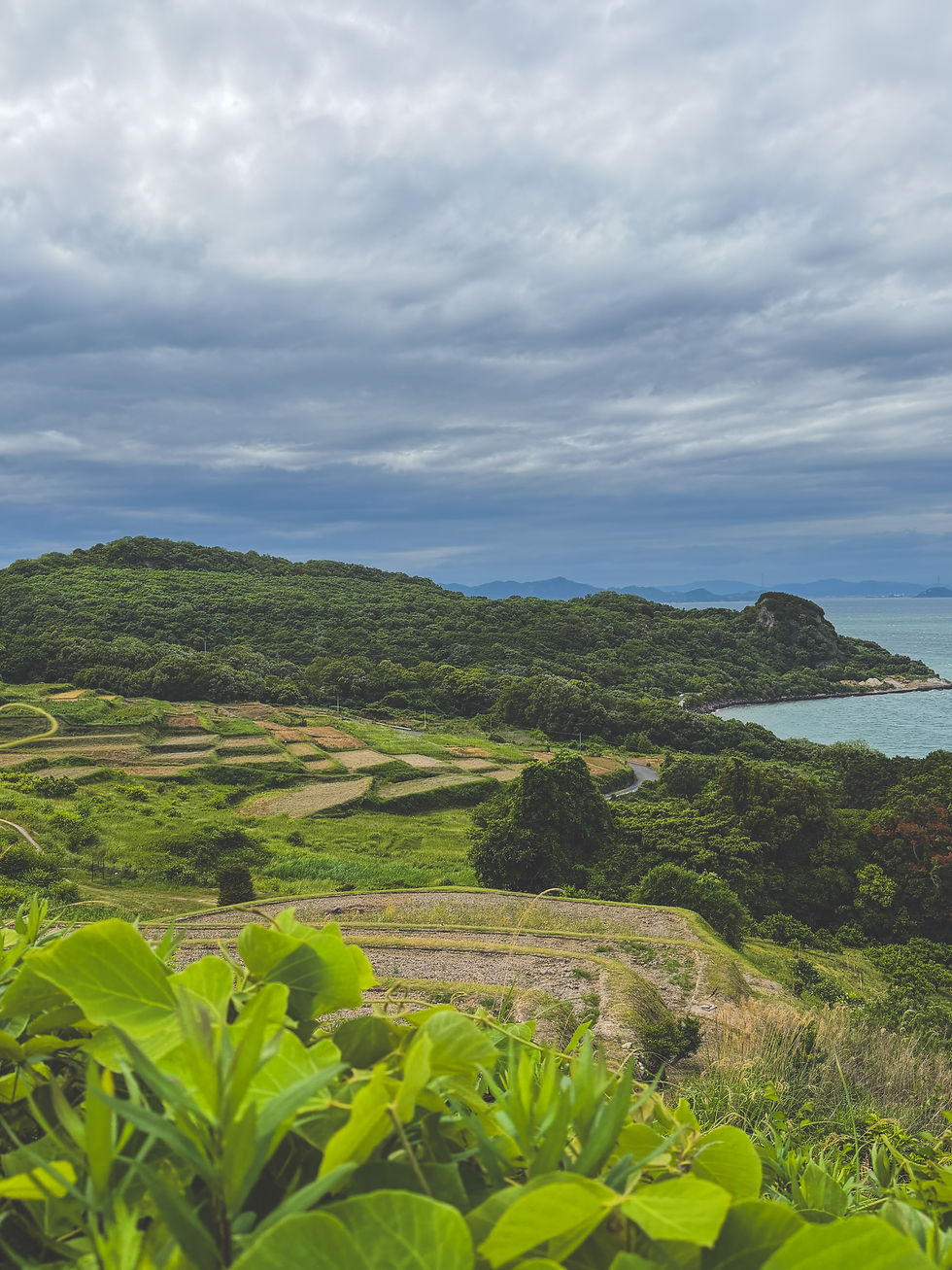
A little fun fact. A lot of these islands, including Teshima, are known for cultivating rice due to the warm climate and humidity in the region. Just outside of the Teshima Art Museum, take in the views of the ocean and the steep terraces.
Teshima Art Museum
Note: Book this in advance. The Teshima Art Museum requires a timed reservation, and they are strict about it.
The museum itself — designed by artist Rei Naito and architect Ryue Nishizawa — is a concrete structure shaped like a water droplet that seems to emerge from the rice terraces surrounding it. There are two oval openings in the ceiling that let in light, wind, and the occasional leaf. No paintings on walls. No pedestals. Just water droplets that form on the concrete floor and slowly travel toward each other like they have somewhere to be.
I sat on the floor for a long time. You're encouraged to.
They also have a cafe where you can sit on the ground and sip tea.
📍 607 Teshimakarato, Tonosho, Shozu District, Kagawa
💴 ¥1,800 online / ¥2,000 on-site
🕐 Timed entry required — book online via Benesse Art Site in advance (closed Tuesdays)
Teshima Art Museum
Day 2: Naoshima
Naoshima is the most famous of the art islands and the one that started it all. I got around entirely by bike, taking in the views as I pedal between museums.
Start your day before 9:00 AM by catching the ferry. After a roughly 20 mins ferry ride, there are plenty of rental bike stores to choose from. If you didn’t reserve in advance (like myself), recommend getting there early. They all cost approximately ¥1500 for the full day.
Be sure to follow this ferry timetable if you’re coming from Uno or Takamatsu.

Coffee at Akaito
I started the morning here. A quaint coffee shop with a simple menu. It's a couple of minutes' walk from Miyanoura port, cozy, and the kind of place you end up sitting for longer than planned.
📍 2269, Naoshima, Kagawa District, Kagawa
🕐 Tue–Sun 7:00 AM – 5:00 PM (closed Mondays)
Akaito Coffee Akaito Coffee Akaito Coffee
Lee Ufan Museum
A collaboration between the artist Lee Ufan and architect Tadao Ando, the museum is built into a hillside and approached by a long narrow path with towering concrete walls. By the time you reach the first room, you're already in a different mental state.
Note: No photos allowed inside.
📍 字倉浦1390, Naoshima, Kagawa District, Kagawa
💴 ¥1,200 online / ¥1,400 on-site
🕐 10:00 AM – 5:00 PM (closed Mondays)

Chichu Art Museum
Note: Book this one well in advance. It sells out.
The Chichu is built mostly underground — Tadao Ando buried the entire museum into a hillside to preserve the landscape, with skylights that pull natural light into the galleries throughout the day.
The permanent collection is small — works by James Turrell, Walter De Maria, and Claude Monet — but the scale and the way each work is experienced is unlike anything else.
📍 3449-1, Naoshima, Kagawa District, Kagawa
💴 ¥2,500 online / ¥2,800 on-site (weekdays) ¥2,700 online / ¥3,000 on-site (weekends & holidays)
🕐 Timed entry required — book online via Benesse Art Site in advance (closed Mondays)

Benesse House Museum
This is the original — the museum that started Naoshima's whole art-island reputation back in 1992. Tadao Ando designed it as both a museum and a hotel. The galleries spill outward into the surrounding terrace, forest, and beach, so the art doesn't really stop at the walls. You're as likely to round a corner outside and find a sculpture as you are inside.
📍 Benesse House, Naoshima, Kagawa District, Kagawa
💴 ¥1,300 online / ¥1,500 on-site / Free for ages 15 and under and overnight guests
🕐 8:00 AM – 9:00 PM daily
Benesse House Museum Benesse House Museum Benesse House Museum
Benesse Area Walk (Yayoi Kusama’s yellow pumpkin!)
The area around Benesse House is scattered with outdoor sculptures where you can walk between freely. Be sure to check out Yayoi Kusama's famous yellow pumpkin and various installations by the water.
💴 Outdoor works are free to view
Coffee Break at Naoshima Coffee
I initially biked past this place and had to turn around. A stop worth stopping before diving into Honmura. The scenic couch seats overlooking the Seto Inland Sea are worth the extra ¥500 charge with a nice glass of coffee. A perfect coffee break from all the biking and ponder as you stare off into the sea.
📍 3299-50, Naoshima, Kagawa District, Kagawa
🕐 Mon, Fri–Sun 8:00 AM – 6:00 PM (closed Tue–Thu)
Naoshima Coffee Naoshima Coffee Naoshima Coffee
Honmura Area
The Art House Project in Honmura is a series of old buildings and homes throughout the village that have been transformed into permanent artworks. Walking through feels like the line between art space and lived-in neighborhood has been deliberately blurred — which I think is entirely the point.
💴 Individual art houses ~¥400–500 each; combination tickets available
Dinner at Yayoda
Ended the day here. A small restaurant in Honmura focused on serving sashimi. Their specialty is serving barnacles, which I had in my miso soup as part of my dinner set. Cash-only.
Note: I had to return my bike before 6pm. After I dropped it off at the port, I took the bus back to Honmura Area. Reserve in advance or get there early.
📍 842-1, Naoshima, Kagawa District, Kagawa
🕐 Fri–Sun 6:00 PM – 8:00 PM (closed Mon–Thu)
Yayoda Barnacle Miso Soup at Yayoda Set Meal at Yayoda
Day 3: Shodoshima
Shodoshima is the biggest island in the Seto Inland Sea after Awajishima, and it has a different energy from the art islands — more agricultural, a little bit Mediterranean feel with all of the olive trees growing. I got around by a mix of bike and bus here, because the distances are larger than they look.
Check the Shodoshima Ferry timetable before planning your day.
Angel Road
A tidal sandbar that only fully appears at low tide, connecting the shore to a small nearby island.
Check the tide schedule before you go.
📍 24-92 Kō, Tonosho, Shozu District, Kagawa
💴 Free

Olive Park
Shodoshima is the birthplace of olive cultivation in Japan. The government introduced the trees here in 1908, and the island has been growing them ever since. Stroll through the olive groves and maybe snap a pic of you in a “magic broom” (inspired from Kiki’s Delivery Service) against the backdrop of the trees and a greek windmill. There’s also a small museum and a shop full of olive oil, soaps, and things you absolutely will end up buying.
📍 甲1941-1, Nishimura, Shodoshima, Shozu District, Kagawa
💴 Free entry; broom rental free
🕐 8:30 AM – 5:00 PM daily
Olive Park
Marukin Soy Sauce Museum
Shodoshima has a 400-year history of soy sauce production, and Marukin is the best place to understand why that matters. The museum is small but the information is digestible — and if you time it right, you can even press and taste fresh soy sauce.
📍 1850 Nōma, Shodoshima, Shozu District, Kagawa
💴 ¥500 (adults) / ¥250 (elementary school)
🕐 9:00 AM – 4:00 PM daily
Marukin Soy Sauce Museum
Somewhere between pedaling past rice terraces and sitting on the floor of a concrete museum watching water move, this trip became something I hadn't planned for — a creative reset disguised as a scavenger hunt. The Setouchi Islands are not just for art lovers. They're for anyone who wants their travel to leave a mark. Come for the art. Stay for everything else.


Comments